
The Scarlet Witch and indie darling (who can next be seen as the apex of a love triangle with Miles Teller and Callum Turner in Eternity) has managed to build an A-list Hollywood career while (mostly) avoiding the tabloid pitfalls of fame. But she says she’s not purposefully enigmatic. Some things are just none of your business.




INSTYLE “Mom Tok?”
It’s Friday night in the Valley and I am explaining The Secret Lives of Mormon Wives to Elizabeth Olsen while sharing a baguette. (Let that sink in for a second.)
“Ah, sexy moms,” she nods. “Mmm. In Utah. This is a reality show?”
The Marvel star and indie queen—known for TV series like WandaVision, Love & Death, and Sorry for Your Loss, which she co-produced, and films such as Wind River, Ingrid Goes West, and the upcoming Panic Carefully with Julia Roberts—is genuinely baffled at the premise of a popular unscripted series about young mothers whose common bond is TikTok, hair extensions, and Jesus Christ. “You have to understand,” she says with a shrug, turning back to the salad we’re splitting. “I’m, like, a 90-year-old. If someone new is around, my friends tell them, ‘You have to talk to Lizzie like she’s a Boomer.’”
For the record, when at home here in Los Angeles or in Northern California, where she also resides, Olsen and her husband, the writer and musician Robbie Arnett, watch a lot of movies. They are also watching The Sopranos for the first time (“it’s given me nightmares”). She only indulges in non-prestige (some would say “trashy”) television when in hotel rooms—“that stuff can’t come into the home”—and is such a dedicated sports fan (all of them) that she watches TV via cable “with a hard line so it doesn’t glitch and I miss things.”
Olsen picks up a piece of lettuce with her fingers. Her big green eyes, Margaret Keane–style saucers that have been formidable on-screen foes to Aubrey Plaza, Kathryn Hahn, Iron Man, Jesse Plemons, and Godzilla, grow even larger. “She’s heavily dressed. I should have warned you.” She plops the leaf in her mouth.
This bistro is one of her spots. It’s on Ventura Boulevard, on the other side of the Santa Monica Mountains from Beverly Hills, in the San Fernando Valley. When Olsen, 36, walked in, the only heads that turned were those of the waitstaff, who greeted her casually as she made her way to our table—tousled hair, a red topcoat draped over her shoulders waving behind her like a cape. The only tell that she’s famous, the common denominator amongst Higher Beings when they mix with us proletariat: skin so pristine her face almost appears differently lit, as though inserted into the dining room in post-production A.I.
We’re not far from where Olsen lives today, or her childhood home. But she shakes her head when I declare she grew up “in Hollywood.”
“I mean, yes and no. Other than the fact that, like, kids in our house were working, it felt very much like a strict, disciplined household. My sisters always went to a school.” She tears off a hunk of bread and slathers it with bright yellow butter.
Her sisters are, of course, Mary-Kate and Ashley. Three years older, they are the “You got it dude!” Olsens. The New York Minute Olsens. The perfect-gray-sweater-for-$1500-by-The-Row Olsens. As those two were working, Young Elizabeth, for a short time, considered performing professionally as well.
“I thought I wanted to be a child actor, but then my ballet teacher wouldn’t put me in The Nutcracker because I’d missed so many rehearsals. And that was the only Nutcracker I wasn’t in my whole life because I was auditioning for TV or film or whatever.” Somehow, at that moment and barely 10, she could see the future. “I wanted to have the career I have now, but I didn’t need to do it until later. I wanted to do recess with my friends.”
Later was 15 years ago, when she stormed the Sundance Film Festival with Martha Marcy May Marlene, a tight, tense thriller about a young woman leaving a cult, co-starring Sarah Paulson. (I tell her that an alternate timeline—Marvel reference—has her working for 30 years, if you count appearing with her sisters in How the West Was Fun. She laughs. “Okay, then I’ve been ‘playing’ for 30 years, because that was not professional!”)
At her first Sundance, Olsen was mostly thinking about a paper she had yet to finish. She hadn’t graduated from NYU. But there she was, the newly crowned indie It girl.
“I thought everyone was insane,” she remembers of the reviews and hype. “I thought everyone was drinking Kool-Aid that I’d never tried. The only way I analyzed it was: Everyone’s in a literal snow globe there. They kept telling me, ‘Do you know how much your life’s going to change from this?’” Today she has slight regret. “I made some decisions, sometimes working with, like, maybe not the most…curated group of people.” Curation is a term Olsen turns to a lot. “I didn’t realize I have the power of curation. I was so excited anyone wanted me to be in anything.”
She loves her industry, in fact, all aspects of it. Olsen can and does talk at length about the perils of pilot season (she’s waiting for a greenlight on a dramatic series now), the horror of studios wanting to make films “at minimum” (lowest budget), and the bliss of still renting movies at a video store. (She’s analog, baby!)
Olsen rattles off films she’s recently watched, like The Day of the Locust (“Donald Sutherland, the way it ends, fear and desperation of an entire society that just eats itself is the last act”) and Woody Allen’s Stardust Memories. She believes movies are meant to be seen in theaters, like her new film, Eternity, which she stars in and executive produced. She won’t sign onto a film if there’s no theatrical release. “If a movie is made independently and only sells to a streamer, then fine. But I don’t want to make something where that’s the end-all.” Part of this is almost spiritual for her. “I think it’s important for people to gather as a community, to see other humans, be together in a space. That’s why I like sports. I think it’s really powerful for people to come together for something that they’re excited about.” She seems genuinely worried that all the post-pandemic separation is irreversible. “We don’t even audition in person anymore.”
It’s about an hour into dinner when I realize Elizabeth Olsen—is this the part where I get to call her Lizzie? No?—is not that mysterious.
She’s not an Olsen. She’s an actor. A capital-A Actor. Like an Actor before Actors also had to be Brands and have Brands and be paid by Brands to go to fashion shows and restaurant openings with other Actor Brands and plan movie premieres to coincide with their latest single drop and the launch of their new Actor Brand clothing collab with, I don’t know, Boohoo.
“My friends say you’re like an actor from the ’80s,” I tell her.
She smiles broadly, her eyes widening again, and she leans in to me over her trout almondine. “I love that!” Beat. “What does that mean?” We both laugh.
I tell her what I just outlined above. “Oh,” she nods vigorously. “You mean when people used to just walk into a movie premiere wearing their own clothes.” Olsen just wants to work. And she wants to talk about the work. She does not like all this stuff, the selling part—when the Actor Brand arrives in full regalia, Venus on an iPhone 17 half-shell. “It’s getting worse,” she says of all the non-acting studios and streamers cram into contracts these days—events and “fun” videos and an extensive social media marketing rollout. “It’s like, Why am I wearing other people’s clothes all the time?”
She probably does not want to be here talking to me on a Friday night, batting away personal questions. “No,” she tells me simply when she casually mentions a New Yorker article she printed (“I love my printer”) and mailed to her mother and I, the nosy journalist, immediately pounce, asking her what the story was about. “I don’t want to talk about that,” she says quickly and calmly. “It’s too personal.” She laughs when she says it, I think out of politeness, but she is definitely not joking.
Speaking of: Olsen and Arnett married in 2019. The public did not find out until two years later, when she threw the words “my” and “husband” in succession into an interview. (With Kaley Cuoco, of all people.) The headlines afterward: “Elizabeth Olsen Secretly Eloped” and “Elizabeth Olsen Accidentally Revealed She Got Married in Secret.” I read them to her and she cracks up. “Why is it a ‘secret?’ I eloped. You just didn’t know about it.”
Olsen knows people think she’s mysterious. “I’m not mysterious. I think I’m private in certain aspects, but I say too much. I’m long-winded. And circuitous.” (Long-winded? Sure, delightfully so. Circuitous? No.)
A few years ago, Olsen decided to take a break from Instagram. She never returned. “If you put yourself out there, people think that you want them to come in. I think for me, I don’t want anyone to know my personality all that well. Or identify me as someone who does a specific type of goofy trope video or something on Instagram once a month. I don’t want people to associate me with a brand; I want people to watch a movie and see me as a character. I think there are people who do both beautifully. I don’t think it means that someone can’t be online and also a great actor. It’s just…” She fiddles with a frayed tear in the sleeve of her red striped men’s shirt. (It’s vintage; she only wears vintage, like her Cartier watch and Levis, and things her sisters give her from The Row, like her coat, she tells me. Her version of conscious consumerism. “I love buying food, and I love buying homegoods. Linens. I buy a lot of small tables…I’ll spend money, but it’s not on clothes; it’s on skin products, it’s on lasers. I don’t want to do anything crazy to my face, so I invest in its elasticity.”)
She stops fiddling. “I don’t know how to be a performative version of myself to the public, nor do I want to.”
We talk about a film of hers that’s become a cult classic: Ingrid Goes West, a dark comedy about an obsessive fan (Aubrey Plaza) of an influencer played by Olsen. “I love that movie. I really attribute [its success] to Aubrey because she’s so fucking great. Crazy that we made that before the word ‘influencer’ was even a word.”
“I don’t particularly care about what anyone does in their private life. I don’t think it’s any of my business,” she continues. “And in the large scope of what matters in the world, I don’t think inviting people into my life should matter to anyone.”
I deliver the bad news. The irony and hellscape for people like her is that in deleting @elizabetholsenofficial, in endeavoring unknowability, her entire none-of-your-damn-beeswax weltanschauung only makes her more cool. And therefore, more desirable.
“I hope so. Great for the movies. I just don’t really think much about it.”
I hate to break it to you, but Elizabeth Olsen dies in her new film. That is, in fact, necessary character development as her film takes place in the afterlife. The plot twist is that Elizabeth Olsen is starring in a movie with a happy ending. A rom-com in fact. (Also: Someone made a rom-com! For theatrical release! With big stars!)
In Eternity, Olsen’s Joan arrives at “the junction,” a pleasant purgatory-cum-train station seemingly decorated by Wes Anderson where the recently deceased are aggressively brochured on where to spend, well, eternity. Each destination is themed like a bachelorette party: Studio 54, Paris, gay bar, beach, S&M, wine. She arrives shortly after her husband, Larry (Miles Teller), who choked on a pretzel. (Not a spoiler—it’s in the first 10 minutes and, by the way, though Joan and Larry died in their 90s, in this afterlife folks look like they did when they were happiest, so, in their prime.)
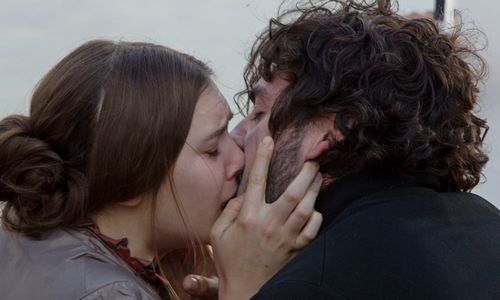
Then the rom-com part: Joan’s war-hero first husband (Callum Turner) is at the junction, too, waiting for her to arrive. Now, she must decide which lover to spend forever with. If you’re asking yourself why Olsen, Teller, and Turner don’t just form a throuple, because why not: “It was never discussed,” she says with a giggle before making a salient point. “Polyamory is probably not something that would occur to folks born in the 1930s.”
In Eternity, Olsen is funny, anxious, strong, emotionally volatile. Her eyes well up, then she turns on a dime. She storms and screams and runs and yearns and tilts at windmills. She is, at twists and turns, Diane Keaton in the ’80s, Shirley MacLaine in the ’60s, and Meg Ryan in the ’90s.
I spoke to one of her leading men a few days after our dinner. Teller (an avowed fan, by the way, of rom-coms like Billy Wilder’s The Apartment with MacLaine and When Harry Met Sally with Ryan) met Olsen when she invited him and director David Freyne over to her house to do a read-through of the script. He is rapturous in his praise of his co-star. “Lizzie is a pro,” says Teller. “She’s what I would describe as an actor’s actor, director’s actor, and a producer’s actor. She’s just got a wonderfully human quality about her, where I think it’s impossible for her to create a false moment.” Same. By the time the credits on Eternity roll, right along with my tears incidentally, the whole thing makes an Elizabeth Olsen fan happy she’s not doing something so…
“Dark?” Olsen posits. “I know.” It was nice to be in a happy ending, she agrees.
Both Olsen and Teller describe the A24 project as a film from another time. “And simply happy,” she says. “I was talking to someone who was trying to overanalyze it, and I was like, ‘It’s not for that. It’s a screwball comedy.’ Eternity is supposed to entertain and make you feel joyful and make you think about how we make choices in our lives.” She, too, likes the 1960 film The Apartment. “We made a Billy Wilder love song, about a lifetime of love and marriage.”
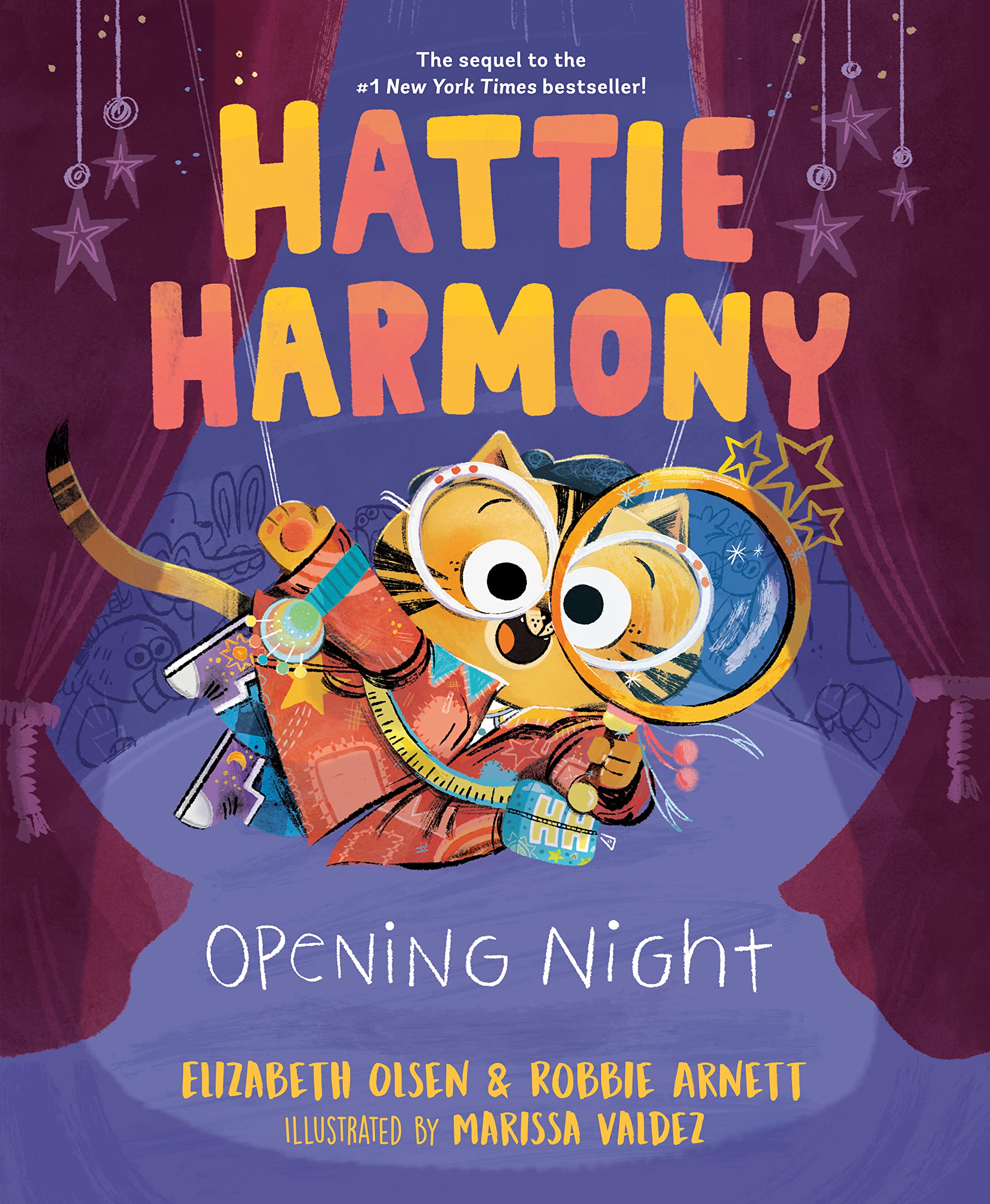
“It made me think about my husband,” she says. In the same breath, she describes herself as very independent and their relationship as “very codependent. I adore him.” The two sound like black belt cinephile snobs in the best way. Arnett and Olsen have even collaborated on a duo of children’s books centered on a bespectacled cat who shares coping mechanisms for anxiety: Hattie Harmony: Worry Detective. “But seriously, that’s how [Robbie is] going to go in his old age, just choking on pretzels. You know? Just kind of like mindless bickering and then choking on a pretzel.” She’s beaming saying this, which is absurdly wonderful.
“It was nice to do a romantic comedy that was more about an entire human life. An ordinary relationship that is this huge love story in their lives. A simple enjoyment of something that maybe has been lost, that we admire in our grandparents or something. It’s a happy movie about an ordinary love. Truly ordinary.” It’s a message that our digitally-obsessed culture (something she seems to genuinely abhor) could stand to take to heart. “We’re in a world where we have to pick the best toothpaste or Google the best brush for your hair. And then you’re swiping on people on apps, and you’re like, ‘Well, he smiles funny.’ Or ‘He looks like he’s too into his body.’ Just talk to people!”
We order fresh mint tea. “Oh, I lied,” she suddenly announces. “I bought these shoes.” A leg extends from under the table, ending in what looks like a Belgian loafer atop a chunky heel, the color of blood. “They’re Phoebe Philo.” She explains that in the pilot she just wrapped, she wore these same shoes. “They wouldn’t give them to me, so I bought them. They just feel so good on my feet.”
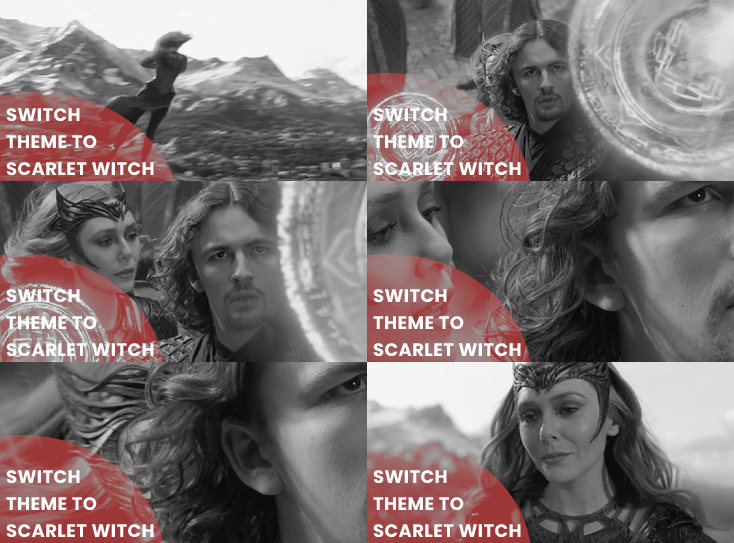
She’s wearing a lot of red. And just the day before, Marvel fans were rapturous that the Scarlet Witch, the character she has played across six films and a dramatic TV series that earned her an Emmy nomination, was alive—maybe undead is more accurate?—in a new animated series titled Marvel Zombies. This seems like news to Olsen.
“I recorded that so long ago, I’m sorry. It’s so crazy that… I feel terrible that I don’t… I can’t speak more to it.” She recalls a suitcase with microphones and a script arriving at her house several years ago.
Wanda Maximoff, a.k.a. The Scarlet Witch, was last seen under a pile of rubble that she had crashed upon herself at the end of 2022’s Doctor Strange in the Multiverse of Madness. Fate unknown. Does she think Wanda is still alive? “No idea.”
Making the films is joyful, Olsen says. “And goofy. It’s ridiculous. We’re grown people behaving like children on a playground. We’re flying. We’re shooting things out of our hands. And it’s a character that I’ve gotten to return to so many times over 10 years. It’s good to put her down and then I miss her and I want her back. I’d jump at the opportunity to be in her shoes again.” (An hour later, on the drive home, I began to wonder if the red Phoebe Philos actually were an Easter egg. Is Wanda alive?)
Olsen loves the Marvel universe, but as much for what’s on-screen as what we don’t get to see. “It’s the consistency of a community and a job, which is hard to find.” She’s on a soap box and it’s persuasive. “The insane camera movement, stunt work, and special effects, visual effects that are happening in real time. It’s a lot of coordination, it’s hundreds and hundreds of people on set, and it’s a powerful thing to be a part of all those people working towards one goal. The people doing the visual effects are artists.” The MCU also allows her to make the films that made her a star, the smaller films, like last year’s His Three Daughters, with Carrie Coon and Natasha Lyonne. “It’s financial security, I can make choices. It’s offered me value, and that’s useful when making independent movies.”
She adds something that really runs counter to all the complaints of superhero franchises clogging up studio lots and theater marquees. “The soul, the spirit, the heart is fulfilled doing it. It does mean something. I care about the acting being great—everyone does.” She’s cognizant of the haters and the comments and the lack of recognition during awards season. “There are hundreds of people doing their job to the highest degree. That’s why it’s frustrating for them to not be acknowledged for the artistry that is involved. A lot happens in visual effects afterwards—‘cause we can’t actually fly, you know?”
The waiter returns with our tea. “And do you guys have those little coffee cookies?” She looks at me. “They’re very cinnamon-y and taste like a snickerdoodle.”
Every morning, Lizzie jumps into cold water. (I can say Lizzie now.) “I just love it. I love the cold. I went in the ocean in Northern California yesterday, and it was foggy and freezing. Incredible. It makes me so happy.” This ritual is a new thing, she says. “Last couple of years. I didn’t like even being in water before.” She reckons it started with the dystopian sci-fi film, The Assessment, which she shot in 2023. “I had to learn how to swim for it and be comfortable swimming. It got me over a little bit of a fear of the ocean. So, now, any body of water that’s cold, I want to be in it.” This includes when Lizzie is on the road, in a hotel (“I’ll put cold water in a bath”). “I am so excited for [it to be] winter again, because I jump in the pool every morning and then do, like, mobility exercises, because I’m 90 years old. And then I make coffee and journal. And it is so special.”
She concedes she invited me to a 5:15 dinner. “It’s all they had, honestly! But, truly, 5:15 is a great time for dinner for me. I have such a habit of acting like an old woman. There is a part of me that’s like, Why don’t you get more youth into your life or something? Like, eat late and sleep in.”
Lizzie takes a last swig of mint tea, throws on her red cape, and drives home to watch The Sopranos with her husband. It’s 8 p.m. on a Friday night in the Valley. I’m starting to really love Lizzie Olsen with a happy ending.